
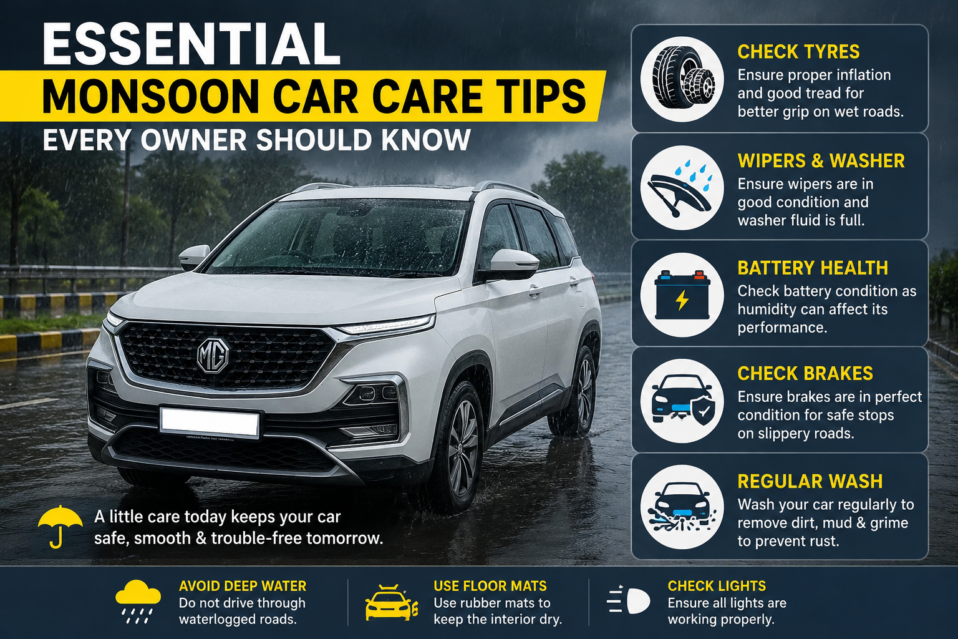
The monsoon season brings relief from the summer heat, but it also creates challenges for car owners. Heavy rain, waterlogged roads, slippery surfaces, and high humidity can affect your car’s performance and safety if proper care isn’t taken.
Whether you drive a brand-new vehicle or a pre-owned car, regular maintenance during the rainy season is essential to avoid unexpected breakdowns and costly repairs.
In this guide, we’ll share practical monsoon car care tips to help keep your vehicle safe, reliable, and road-ready throughout the rainy season.
Why Monsoon Car Care Is Important
Rainwater, mud, and moisture can damage several parts of your vehicle, including:
- Braking system
- Tyres
- Battery
- Electrical components
- Engine bay
- Suspension
- Body paint
- Underbody
A little preventive maintenance can save you significant repair costs later.
1. Check Your Tyres Before Every Long Drive
Tyres are your car’s only contact with the road, making them especially important during wet conditions.
Ensure:
- Adequate tread depth
- Correct tyre pressure
- No cracks or cuts
- Proper wheel alignment
Worn tyres increase the risk of skidding and hydroplaning on wet roads.
2. Inspect the Braking System
Brakes are critical during the rainy season.
Watch for:
- Reduced braking performance
- Unusual noises
- Brake pedal vibration
- Warning lights
If you notice any problems, have the brakes checked immediately.
3. Replace Worn Wiper Blades
Clear visibility is essential when driving in heavy rain.
Replace wipers if they:
- Leave streaks
- Make squeaking noises
- Skip across the windshield
- Fail to clear water effectively
Good-quality wipers greatly improve driving safety.
4. Check All Exterior Lights
Rain reduces visibility for everyone on the road.
Ensure that your:
- Headlights
- Tail lamps
- Brake lights
- Indicators
- Fog lamps (if equipped)
are clean and functioning properly.
5. Keep the Windshield Clean
Dirt mixed with rainwater can make driving dangerous.
Use:
- Quality windshield washer fluid
- Microfiber cloth
- Glass cleaner
A clean windshield improves visibility in heavy rain.
6. Protect Your Car Battery
Moisture can damage battery terminals and electrical connections.
Check for:
- Corrosion
- Loose terminals
- Low battery performance
If your battery is several years old or showing signs of weakness, have it tested before the monsoon.
7. Avoid Driving Through Deep Water
One of the biggest mistakes drivers make is attempting to cross flooded roads.
Deep water can damage:
- Engine
- Air intake
- Transmission
- Electrical systems
If the water level appears too high, wait or choose an alternate route.
8. Wash Your Car Regularly
Rainwater often contains dirt and contaminants that can affect your car’s finish.
Regular washing helps remove:
- Mud
- Road salt
- Tree sap
- Bird droppings
- Pollutants
Pay extra attention to the wheel arches and lower body panels.
9. Clean the Underbody
The underbody is in contact with debris, mud, and water.
Cleaning it regularly helps prevent:
- Rust
- Corrosion
- Premature wear
An underbody wash is especially useful after driving through muddy or waterlogged roads.
10. Check Door and Window Rubber Seals
Damaged rubber beading can allow rainwater into the cabin.
Inspect for:
- Cracks
- Gaps
- Water leakage
Replacing worn seals helps keep the interior dry.
11. Maintain the Air Conditioning System
Humidity can cause fogging inside the cabin.
Ensure your AC is functioning properly to:
- Remove moisture
- Improve visibility
- Keep the cabin comfortable
Clean cabin air filters if necessary.
12. Keep an Emergency Kit
A well-prepared emergency kit can be invaluable during the rainy season.
Include:
- Torch
- Umbrella
- Mobile charger
- Reflective warning triangle
- First-aid kit
- Drinking water
- Tow rope
- Tyre inflator
- Raincoat
13. Check Engine Oil and Other Fluids
Inspect:
- Engine oil
- Coolant
- Brake fluid
- Windshield washer fluid
Proper fluid levels help your car perform reliably in all weather conditions.
14. Drive Smoothly on Wet Roads
Safe driving habits are just as important as vehicle maintenance.
Always:
- Maintain a safe following distance
- Drive at moderate speeds
- Avoid sudden braking
- Accelerate gently
- Take turns carefully
Smooth driving reduces the risk of skidding.
15. Keep the Interior Dry
Wet carpets and seats can lead to unpleasant odors and mold.
Use:
- Rubber floor mats
- Microfiber towels
- Cabin dehumidifiers (if needed)
Dry the interior promptly after exposure to moisture.
Common Monsoon Driving Mistakes
Avoid these common errors:
❌ Driving too fast in heavy rain
❌ Ignoring tyre wear
❌ Driving through flooded roads
❌ Using worn-out wiper blades
❌ Delaying brake inspections
❌ Skipping regular car washing
Why Buying a Well-Maintained Used Car Matters
If you’re planning to purchase a pre-owned car, it’s wise to check how well it has been maintained, especially if it has seen several monsoon seasons.
At Godrivo, buyers can explore quality pre-owned vehicles with transparent details, making it easier to choose a car that’s ready for all weather conditions.
Whether you’re looking for a hatchback, sedan, SUV, or luxury vehicle, proper maintenance history is an important factor in making the right decision.
Conclusion
Monsoon driving doesn’t have to be stressful. With regular inspections, proper maintenance, and safe driving habits, you can protect your car from rain-related damage while ensuring a safer journey for you and your family.
A little attention today can prevent major repairs tomorrow. Keep your vehicle clean, maintain key components, and drive carefully to enjoy a worry-free monsoon season.
And if you’re planning to upgrade your ride, explore the wide range of quality pre-owned cars at Godrivo.com and drive with confidence in every season.
Frequently Asked Questions (FAQs)
How often should I wash my car during the monsoon?
Washing your car every one to two weeks, or after driving through muddy or flooded roads, helps protect the paint and prevent dirt buildup.
Why is tyre condition so important during the rain season?
Tyres with good tread provide better grip on wet roads, reducing the risk of skidding and improving braking performance.
Can driving through flooded roads damage my car?
Yes. Deep water can affect the engine, transmission, and electrical systems. It’s best to avoid waterlogged roads whenever possible.
What should I keep in my car during the monsoon?
Carry an emergency kit with a flashlight, first-aid supplies, phone charger, warning triangle, umbrella, tow rope, and drinking water.
Is it safe to buy a used car before the monsoon?
Yes, provided you inspect its maintenance history, tyres, brakes, battery, and body for signs of water damage or corrosion. A trusted platform like Godrivo.com can help you find well-maintained pre-owned vehicles.