
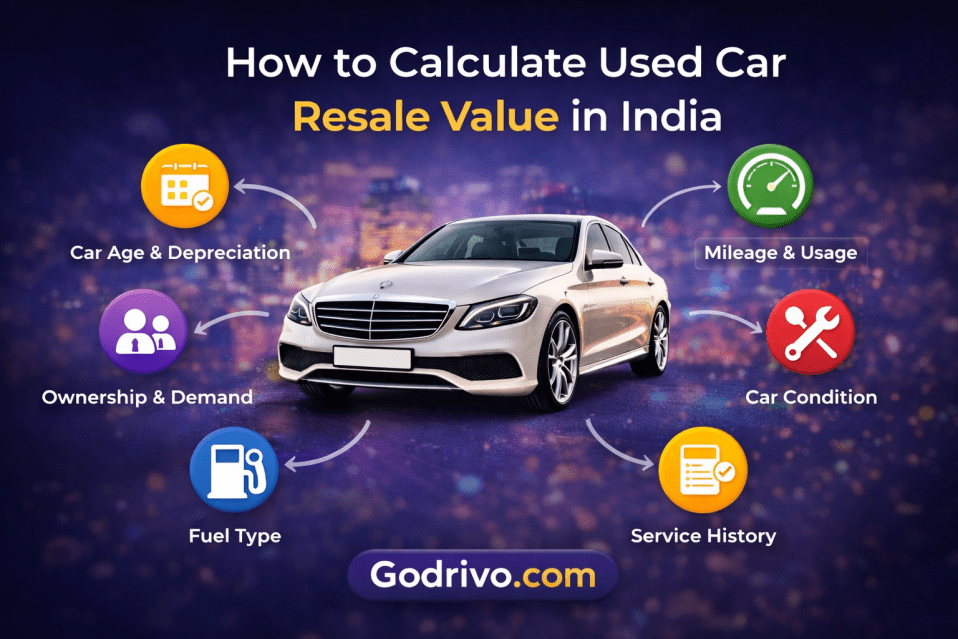
When you plan to sell your car, one of the most common questions is: “What is my car actually worth?”
Calculating the used car resale value helps you price your vehicle correctly, attract serious buyers, and sell faster.
Whether you’re selling a luxury car or a regular vehicle, understanding the factors that affect resale value will help you get the best possible price.
1. Check the Car’s Age and Depreciation
Cars lose value every year due to depreciation. The biggest drop happens in the first 3–4 years.
Typical depreciation pattern in India:
| Car Age | Approx Value Left |
| 1 Year | 80–85% of original price |
| 3 Years | 60–65% |
| 5 Years | 45–55% |
| 7+ Years | 30–40% |
Example:
If a car was purchased for ₹30 lakh, after 5 years its resale value may be around ₹13–16 lakh, depending on condition.
2. Evaluate the Car’s Condition
The physical and mechanical condition plays a major role in resale value.
Buyers check:
- Exterior scratches or dents
- Interior condition (seats, dashboard, electronics)
- Engine health
- Suspension and brakes
- Tyre condition
A well-maintained car with service history can increase resale value by 10–20%.
3. Check the Car’s Mileage
Mileage affects resale value because it indicates engine wear and usage.
Typical mileage impact:
- Below 10,000 km/year → Higher resale value
- 10,000–15,000 km/year → Average resale value
- Above 20,000 km/year → Lower resale value
For example, a 5-year-old car with 40,000 km will usually sell faster and at a higher price than one with 90,000 km.
4. Brand Reputation and Demand
Some car brands have higher resale value due to reliability and demand.
Examples of high resale value brands in India:
- Toyota
- Honda
- Hyundai
Luxury brands like:
- BMW
- Mercedes-Benz
- Audi
may depreciate faster initially but still have strong demand in the used luxury car market.
5. Service History and Ownership
Cars with complete service records and fewer owners usually get better resale prices.
Key factors buyers check:
- Full service history
- Authorized service center records
- Number of previous owners
- Accident history
A single-owner, well-maintained car is usually priced 5–15% higher than similar cars.
6. Location and Market Demand
Resale value also depends on city demand.
For example:
- SUVs and luxury cars sell faster in metro cities.
- Diesel vehicles may have higher demand in highway-driven regions.
Demand for models like the BMW X1 or Mercedes Benz 4Matic is typically stronger in major cities.
7. Compare Similar Listings Online
The easiest way to estimate resale value is to compare similar cars online:
Check listings based on:
- Same model
- Same year
- Similar mileage
- Same city
This gives you a real market price range.
8. Use Professional Car Valuation Platforms
Professional platforms can help determine accurate resale value by analyzing market data.
Dealerships and platforms like Godrivo often evaluate:
- Vehicle inspection
- Market demand
- Service records
- Condition report
This helps sellers get a fair and transparent price.
Final Thoughts
Calculating used car resale value isn’t just about the car’s age. It depends on multiple factors like condition, mileage, brand value, ownership history, and market demand.
If you want the best resale value, make sure to:
- Maintain your car regularly
- Keep service records
- Fix minor damages before selling
- Compare market listings
Selling through a trusted dealership or verified platform can also help you get a better price and faster deal.
✅ Pro Tip:
If you’re planning to upgrade to a luxury car, platforms like Godrivo offer verified used luxury cars, transparent pricing, and easy finance options. http://Godrivo.com